All Categories
Featured
Table of Contents
Notes: GDP growth is defined as the annual modification in real (inflation-adjusted) GDP in the projection year compared to the previous year. Unemployment rate is as of December for each year. Core inflation is the year-over-year change in the Customer Prices Index, leaving out unpredictable food, energy, alcohol, and tobacco prices, based on the fourth-quarter average for each year.

Yael Selfin, Vice Chair and Chief Financial Expert, KPMG in the UK, was signed up with by David Smith, Economics Editor at the Sunday Times and Chris Hearld, Group Handling Partner, KPMG, to check out how households and services might be affected and the difficulty for the brand-new federal government of providing growth while handling public financial resources.
The world economy grew by 3.3 per cent last year, nearly identical to the rates tape-recorded in 2023 and 2024. United States development slowed from 2.8 per cent in 2024 to 2.2 per cent in 2025, as tariffs, tighter immigration policy and elevated unpredictability weighed on need.
China and India kept rapid expansion at 5.0 percent and 7.4 per cent respectively. This shows postponed tariff effects and raised uncertainty dampening investment. Development in innovative economies is set to slow to 1.8 percent in 2026 (United States 2.3 percent, Euro Location 1.3 per cent, Japan 0.8 per cent), with emerging markets growing by 4.0 per cent (China 4.6 percent, India 6.5 per cent). United States CPI inflation (2.7 percent in December 2025) is anticipated to typical 2.6 percent in 2026, reflecting tariff pass-through and a weaker dollar.
Securing Venture Capital in UK Capital Markets
The ECB has actually held its policy rate at 2 percent and is likely to keep this stance. Long-lasting bond yields stay raised, with US 10-year Treasuries around 4.3 percent and Japanese 10-year government bond yields increasing dramatically to around 2.3 percent, up from 0.3 per cent in 2023. Tariff impacts are still working through, while United States actions in Venezuela, stress over Greenland, and China's export controls on crucial minerals raise the dangers of additional disturbance.
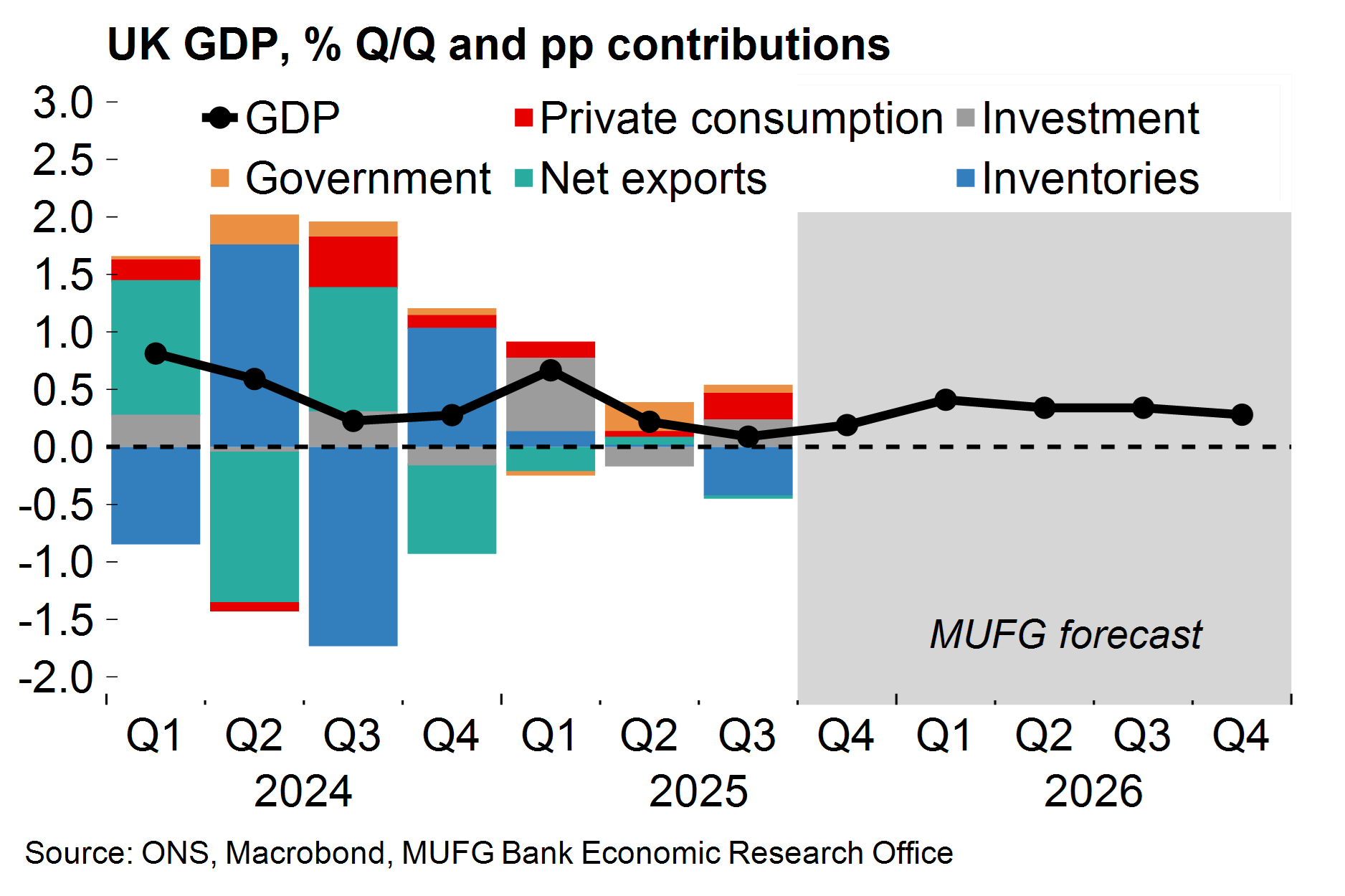
GDP grew by 0.7 per cent in Q1 as organizations brought forward activity ahead of the April increases in employer National Insurance coverage Contributions and the National Living Wage. Development then slowed to 0.2 percent in Q2 and 0.1 percent in Q3, kept back by Budget-related uncertainty and a cyber-attack affecting Jaguar Land Rover.
The near-term outlook is supported by recurring fiscal growth and steady usage growth. Beyond 2027, development should settle a little above pattern at around 1.3-1.4 per cent. Given current population projections, this suggests per capita GDP development remaining below 1 per cent from 2027 onwards, highlighting the UK's consistent productivity challenge.
Modern Investment Strategies for UK Capital Markets
Our main forecast is for CPI inflation to average 2.3 per cent in 2026 and to settle around target thereafter. Services inflation (at 4.5 per cent in December) and core inflation (3.2 per cent in December) stay uncomfortably elevated, pointing to relentless underlying rate pressure.
Typical revenues growth was 4.7 per cent in the 3 months to November 2025. We project this to slow to around 3.6 per cent in 2026 and 3.1 percent in 2027 as increasing joblessness minimizes employees' bargaining power a small amounts essential for inflation to stay at target on a continual basis.
This reflects sticking around unpredictability about the outlook and the scars from the recent inflation shock. We expect this elevated cost savings ratio to continue, constraining consumption development to around 1.0 per cent in 2026 and 1.3 per cent in 2027. With inflation falling and joblessness rising, we anticipate two more 25 basis point cuts in 2026, bringing the rate to 3.25 percent by year-endour estimate of the long-run neutral rate.
Why Technological Transformation Optimises Operations By 2026
On our projection, the present budget plan is close to balance by 202930, suggesting no efficient headroomBox C examines differences in between the OBR's forecast and ours. Public debt continues to rise, with the debt-to-GDP ratio approaching 100 per cent by decade-end, restricting the scope for discretionary financial support in future shocks.
Corporate Analysis of UK Economic Trends in 2026By contrast, favorable net migration supports financial sustainability by broadening the working-age population and widening the tax base. Boosts in employer National Insurance Contributions, substantial upratings of the National Living Wage (NLW), and reforms to work rights have raised the limited cost of hiring by around 7 percent in genuine terms for an entry level position.

Latest Posts
The Strategic Impact of Ethical Supply Chains
Accessing Corporate Funding in the Competitive UK Economy
Why British Firms Must Prioritize ESG Strategies